Introduction
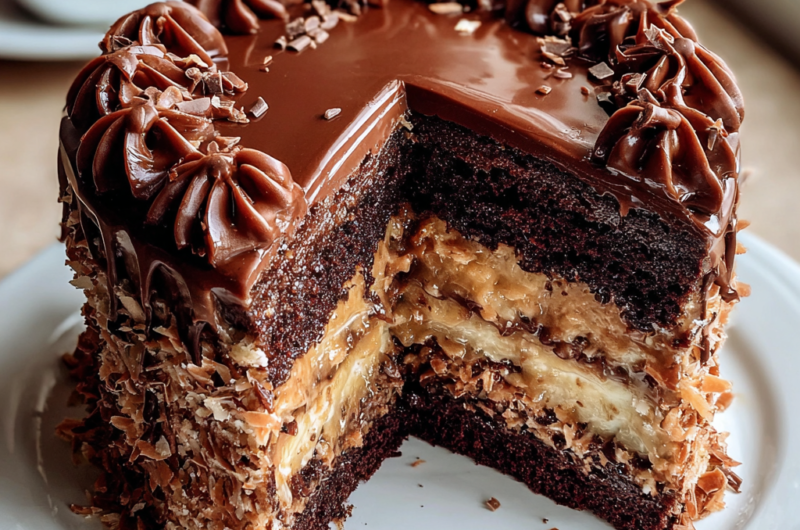
German Chocolate Cake is a beloved dessert that showcases layers of rich chocolate cake complemented by a sweet coconut-pecan frosting. Despite its name, the cake hails from America, named after an English-American named Samuel German who created the dark-baking chocolate used in the recipe.
Creating this cake at home allows you to experience the deep, luscious flavor and delightful textures that distinguish it from other desserts. With its decadent layers and uniquely flavored frosting, German Chocolate Cake is perfect for celebrations or simply indulging in a treat.
Ingredients
- 2 cups all-purpose flour
Flour provides the structure and stability to the cake, allowing it to rise and hold its shape. All-purpose flour works well as it strikes a balance of strength and tenderness. - 2 cups granulated sugar
Sugar not only sweetens the cake but also helps to create a moist texture by retaining moisture as the cake bakes. It also contributes to browning, enriching the cake's flavor. - 1 cup unsweetened cocoa powder
Cocoa powder adds depth of flavor and color to the cake. Unsweetened cocoa ensures that the richness of chocolate is pronounced without unnecessary added sweetness. - 1 ½ teaspoons baking soda
Baking soda is a leavening agent that helps the cake rise while baking. It activates when combined with acidic ingredients, leading to a light and airy texture. - 1 teaspoon baking powder
Baking powder provides additional leavening, ensuring the cake achieves the desired fluffiness. It contains both acids and bases, which reacts with moisture and heat. - 1 teaspoon salt
Salt enhances the flavors of the other ingredients, balancing sweetness and providing a more complex taste profile. - 1 cup buttermilk
Buttermilk adds moisture and tenderness to the batter, while its acidity helps activate the baking soda, contributing to a light texture. - ½ cup vegetable oil
Vegetable oil keeps the cake moist and adds richness without solidifying, unlike butter. It yields a tender crumb. - 4 large eggs
Eggs provide structure and stability. They help in binding the ingredients together and also contribute to the cake’s richness. - 2 teaspoons vanilla extract
Vanilla extract adds fragrant warmth and depth to the cake, enhancing its overall flavor profile. - 1 cup unsweetened shredded coconut
Coconut adds texture and a distinct flavor to the frosting, contributing to the cake’s signature taste. - 1 cup pecans, chopped
Pecans provide a crunchy contrast to the creamy frosting and add nutty undertones, complementing the sweetness of the coconut. - 1 cup sweetened condensed milk
Condensed milk serves as a base for the frosting, lending creaminess and sweetness that balances the rich chocolate flavor. - 1 stick (½ cup) unsalted butter
Butter contributes to the richness and creaminess of the frosting, helping to create a smooth and spreadable texture.
Directions & Preparation
Step 1: Preheat the oven to 350°F (175°C).
Preheating the oven is crucial for even baking. It ensures that the heat is consistent from the very start, helping the cake rise properly and cooking it uniformly. An unheated oven can lead to dense, uneven results.
Step 2: Grease and flour three 9-inch round cake pans.
Greasing and flouring the pans prevents the cake from sticking, allowing for a smooth release after baking. This step is essential to avoid damaging the cake's structure when you turn it out.
Step 3: In a large mixing bowl, combine the flour, sugar, cocoa powder, baking soda, baking powder, and salt.
Mixing the dry ingredients thoroughly helps to evenly distribute the leavening agents and cocoa powder. This step sets up a consistent texture throughout the cake, ensuring uniform flavor and rise.
Step 4: Add the buttermilk, vegetable oil, eggs, and vanilla to the dry ingredients, mixing until just combined.
Avoid overmixing during this stage to prevent a tough cake. Mixing until just combined ensures that the flour is incorporated without developing too much gluten, leading to a tender crumb.
Step 5: Divide the batter evenly among the prepared cake pans.
Even distribution of the batter ensures that the cakes bake uniformly. If one pan has more batter, it may bake faster or slower than the others, leading to inconsistencies.
Step 6: Bake for 30-35 minutes, or until a toothpick inserted into the center comes out clean.
Baking times can vary based on individual ovens, so keep an eye on the cakes as they bake. The toothpick test ensures the cakes are cooked through without becoming dry, achieving that perfect moist texture.
Step 7: Allow the cakes to cool in the pans for 10 minutes, then turn them out onto wire racks to cool completely.
Cooling the cakes in the pans briefly helps them to firm up, making them easier to remove. Transferring them to wire racks allows for even cooling, preventing sogginess.
Step 8: While the cakes are cooling, prepare the frosting by combining shredded coconut, chopped pecans, sweetened condensed milk, and butter in a saucepan.
Combining these ingredients gently heats them, allowing the sugars to dissolve while creating a creamy, cohesive frosting. This step is key to achieving the right consistency for spreading later.
Step 9: Cook the mixture over medium heat, stirring constantly until the mixture thickens.
Stirring constantly prevents the mixture from sticking or burning. Cooking until thickened achieves the ideal consistency for frosting, ensuring it holds its shape when spread between and on the layers.
Step 10: Remove from heat and let the frosting cool to room temperature.
Cooling the frosting allows it to thicken further, making it easier to work with when spreading. If the frosting is too warm, it may slide off the cake layers.
Step 11: Once cakes are cool, spread frosting between each layer and on top of the cake.
Layering the frosting between cakes adds not only flavor but also moisture, enhancing the overall enjoyment. This step allows the flavors to meld beautifully, creating a completed cake worthy of any celebration.
Step 12: Garnish with additional pecans and coconut if desired.
Adding a decorative touch with extra pecans and coconut not only makes the cake visually appealing but also provides extra texture and flavor contrast, elevating the presentation.

Understanding the Frosting
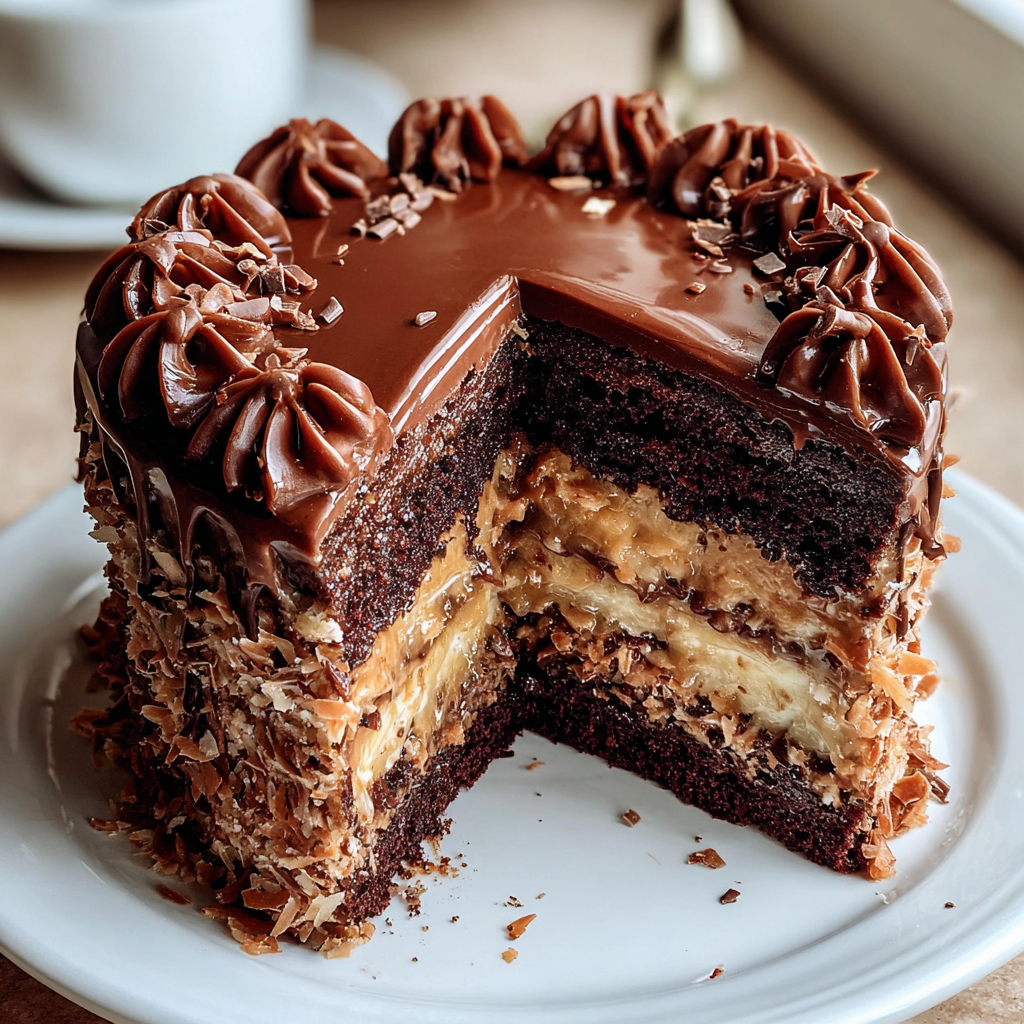
The frosting for German Chocolate Cake is unique and central to its charm, made with shredded coconut, pecans, condensed milk, and butter. This combination creates a rich, creamy topping that balances the intense chocolate flavor of the cake. The nutty scent of pecans mingling with the sweetness of the coconut makes each slice feel indulgent and special, transforming the cake from simple to something extraordinary.
Tips for Perfect Layers
When baking the cake layers, ensuring uniformity in batter distribution and pan preparation can make a significant difference. Each layer should rise evenly to prevent lopsided slices, making them easier to frost and decorate. Additionally, a seamless transition from cooling to frosting is crucial for achieving that professional finish, allowing for even spreading without crumbling.
Enhancing Your Flavor Profile
Though the traditional recipe is delicious as is, consider experimenting with flavor variations. For example, adding espresso or coffee powder to the batter can intensify the chocolate flavor, while a splash of rum in the frosting can introduce a subtle warmth. Such enhancements allow home bakers to tailor the cake to their personal taste, creating a signature version that reflects individual preference.
FAQs
What should I do if my cake is too dense?
A dense cake can result from overmixing the batter or using too much flour. Ensure to measure accurately and mix just until combined.
How can I make the cake less sweet?
To reduce sweetness, consider cutting back on the sugar in the batter slightly. You can also use dark cocoa powder, which imparts a deeper chocolate flavor without adding additional sweetness.
Is it necessary to use buttermilk?
Buttermilk is crucial for the right texture and flavor. If you don't have any, you can create a substitute using regular milk mixed with a bit of lemon juice or vinegar.
Can I use different nuts in the frosting?
Yes, you can substitute with walnuts or almonds for a different flavor. However, keep in mind that different nuts will impart unique tastes and textures.
What should I do if my frosting is too runny?
If your frosting is too runny, try to cook it a bit longer to thicken it up. Ensure to constantly stir to prevent burning, achieving the ideal consistency.
Can I make this cake in advance for a gathering?
While the cake is best fresh, you can bake the layers in advance and freeze them. Frosting just before serving ensures freshness.
Conclusion
Homemade German Chocolate Cake embodies the joy of baking with its rich layers and mouthwatering frosting. The craft involved in creating this cake connects you with generations of bakers who have celebrated using this special recipe.
Enjoy sharing it with friends and family, relishing the compliments while savoring each bite. Remember, the beauty of this cake is not just in its flavor, but also in the love and effort that goes into making it.
Recipe Card
The Charm of Homemade German Chocolate Cake
Ingredients
Method
- Preheat the oven to 350°F (175°C).
- Grease and flour three 9-inch round cake pans.
- In a large mixing bowl, combine the flour, sugar, cocoa powder, baking soda, baking powder, and salt.
- Add the buttermilk, vegetable oil, eggs, and vanilla to the dry ingredients, mixing until just combined.
- Divide the batter evenly among the prepared cake pans.
- Bake for 30-35 minutes, or until a toothpick inserted into the center comes out clean.
- Allow the cakes to cool in the pans for 10 minutes, then turn them out onto wire racks to cool completely.
- While the cakes are cooling, prepare the frosting by combining shredded coconut, chopped pecans, sweetened condensed milk, and butter in a saucepan.
- Cook the mixture over medium heat, stirring constantly until the mixture thickens.
- Remove from heat and let the frosting cool to room temperature.
- Once cakes are cool, spread frosting between each layer and on top of the cake.
- Garnish with additional pecans and coconut if desired.
Notes
Additional serving suggestions: pair with a crisp salad, garlic bread, or roasted seasonal vegetables for balance.
For make-ahead, prep components separately and assemble just before heating to preserve texture.
Taste and adjust with acid (lemon/vinegar) and salt right at the end to wake up flavors.